
How great an ape are you? Our group has been studying great ape communication for over 20-years and across chimpanzees, gorillas, bonobos, and orang-utans; but it’s the first time that we’re getting human great apes in on the picture!
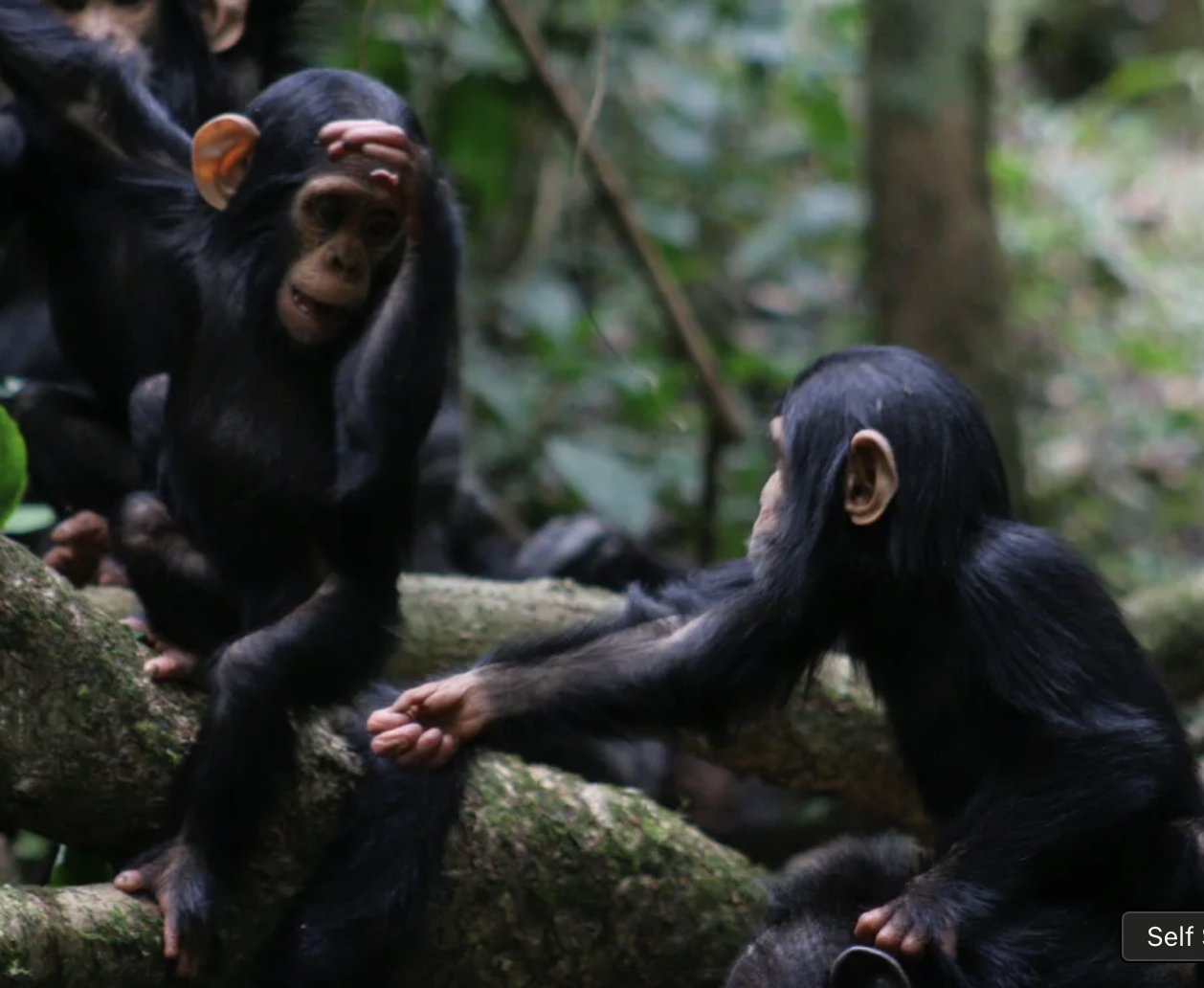
The Great Ape Dictionary video database currently contains ~35,000 catalogued video clips and we are regularly collecting and cataloguing more. We consider these videos to be a data ark that we would like to make as accessible as possible. While we are unable to make the original video files open access at the present time you can search this database to explore what is available, and then request access for collaborations of different kinds by contacting us.
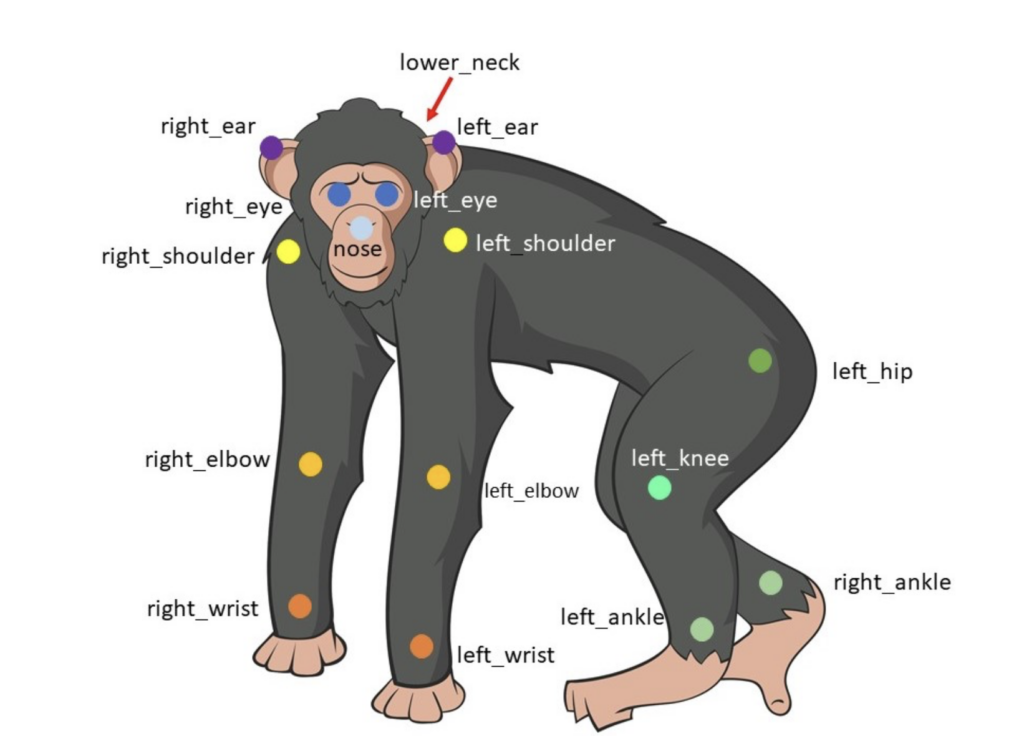
In 2021 we started tot train network models using DeepLabCut to locate and track ape body movements in wild handheld footage of great apes. We are now developing several tools that will help us (and other people) to locate animals and behaviour of interest in video databases, and then to track the movement of each individual. We’re planning to use these to explore ape gestural communication as part of our Great Ape Dictionary project, but we’ll also be able to look at tool-use, locomotion, and much much more.

The Creative Ape Project investigates the evolution of creativity by examining its expression in our closest living relatives: chimpanzees and bonobos. By quantifying, for the first time, the creative capacities of wild non-human apes, we will establish whether and how humans are uniquely creative, along with the underlying drivers that shape creative expression across species.

Fire has been integral to human evolution for at least one million years, providing a source of heat for cooking, protection, and tool-making. Less appreciated is the importance of fire as a source of light, as a mediator and enhancer of social interactions. Working with Prof. Nate Dominy, we test the idea that firelight and its flicker-rate can promote behavioural synchrony within a large social group, a phenomenon termed collective entrainment.

Led by three PIs: Dr. Shumon Hussain (University of Koln), Dr. Johannes Schick (University of Siegen), and Prof. Cat Hobaiter (University of St Andrews), ZooGesture challenges the “species island” model of gesture-oriented research and investigates whether the observation and learning of gestures from nonhuman species, as well as their incorporation into human behavioural and cultural domains, is an overlooked dynamic in the early evolution of humans as technological beings.

The Moyen-Bafing Chimpanzee Project studies a unique and critically endangered population of West African chimpanzees in Guinea, aiming to better understand their behaviour, ecology, and conservation needs. The project is led by three co-directors: Prof. Catherine Hobaiter, Dr. Liran Samuni, and Dr. Erin Wessling.

Established in 2015 by Prof. Cat Hobaiter and Prof. Thibaud Gruber (University of Geneva), the Bugoma Primate Conservation Project focuses on habituating primates, supporting conservation with local communities, conducting behavioural and ecological research, and developing responsible ecotourism with Uganda’s National Forestry Authority.